Some Truths About AI-Generated Images
Summary AI-generated art is already being used across industries. This post shares some firsthand observations from a designer’s point of view.
1. AI Art Is Not a Creative Feast
Yesterday, I was following along with a design course and needed to make a flyer. Even though the assignment only called for a sketch, I decided to go all in and create a full illustration.
Here’s my sketch:
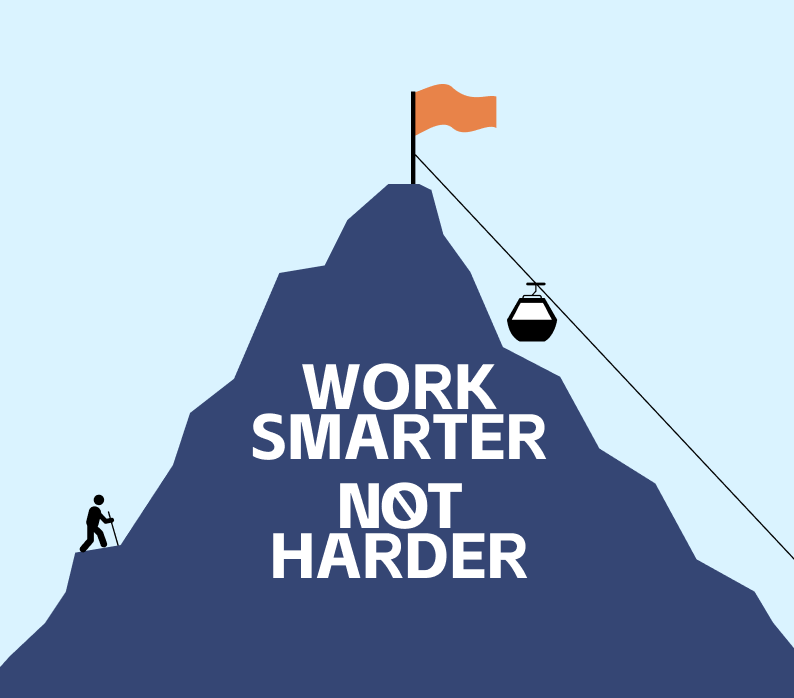
The phrase “work smarter not harder” has been done to death. A quick search turns up images like this:
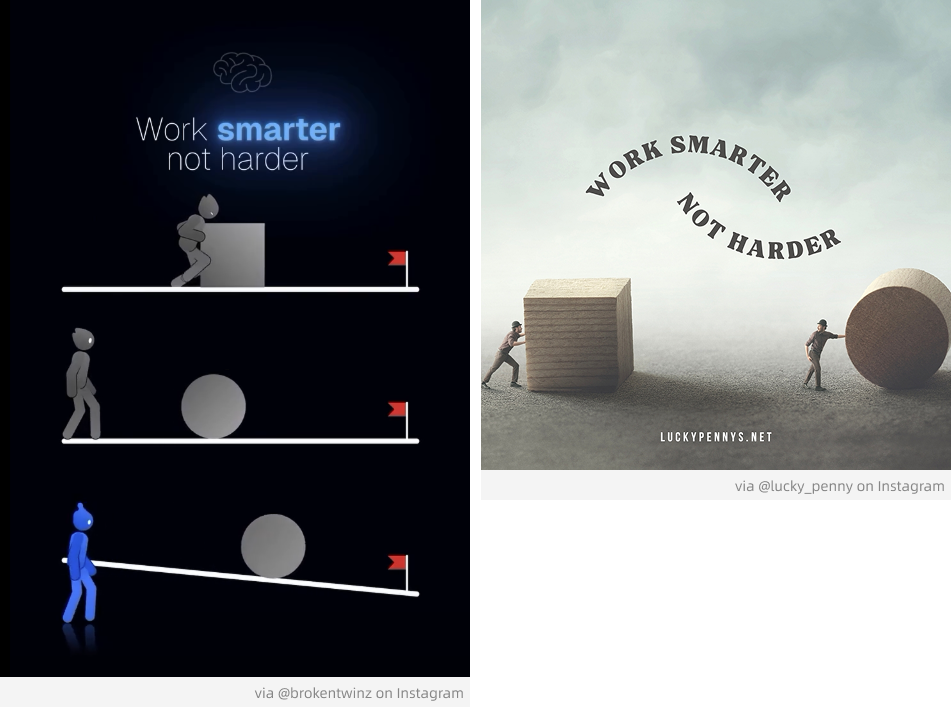
So honestly, my sketch isn’t bad—it has some original flair. But then came the hard part: refining the details, adjusting the style, making it look polished. And to be honest, I hate refining details. Unlike many designers who thrive on perfecting every pixel and get into a flow state while doing it, I rarely feel that joy when drawing.
Then a thought hit me: what if I let AI take a stab at it?
I’d already tried AI for type design before and concluded that AI doesn’t really “learn” to draw—it just blends things together. Here’s that observation. To recap:
- Even the best designers can’t possibly see (let alone remember) every new image that appears online each day.
- You don’t need any design training to appreciate creativity and beauty in type design—which lowers the bar for discussing AI’s role.
- In that type design test, AI scored zero on both technique and creativity.
But this flyer sketch felt more like a real-world design task. Could it help me prove the same point more broadly? I wasn’t trying to hammer a nail just because I had a hammer—I was genuinely curious.
2. The Process Reveals the Truth
Style decisions:
- Since it’s a flyer, the colors should be bright and eye-catching. High contrast helps it pop.
- The texture should be print-friendly, cost-effective, and reusable for digital formats.
What I wanted AI to do:
- Style transformation. The layout and concept were done—I just needed help with the finish.
- Ideally, give me a transparent background for easier layout work.
Three truths about AI-generated images:
promptA: style transformation, more texture, modern flat high-end illustration style.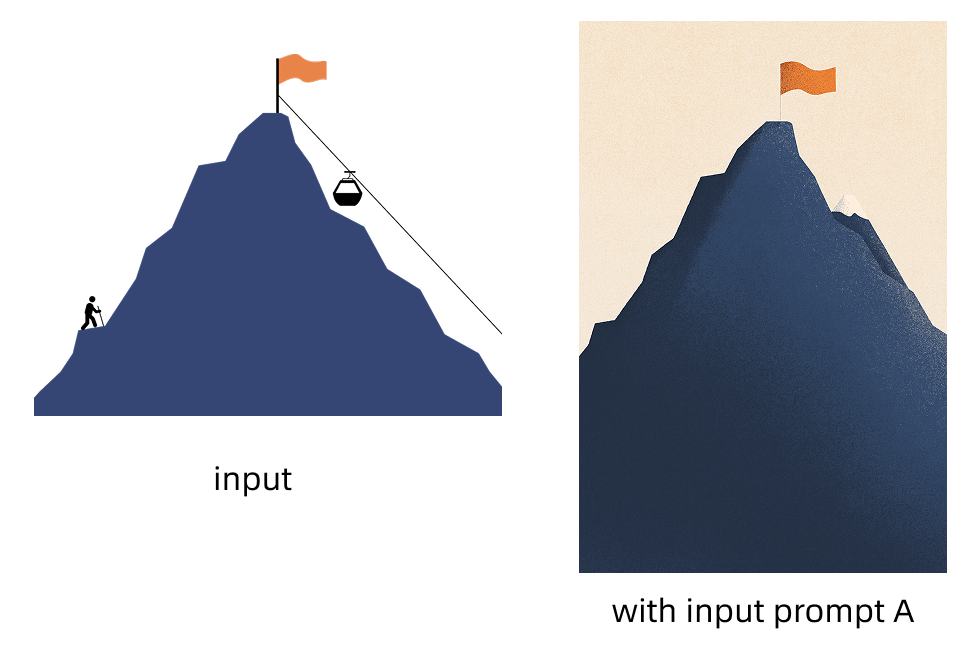
Truth #1: AI doesn’t understand what’s in the image. It just extracts outlines and guesses what the biggest shapes probably are.
promptA: style transformation, more texture, modern flat high-end illustration style.
promptB: more texture, modern flat high-end illustration style. Draw a gondola with transparent background.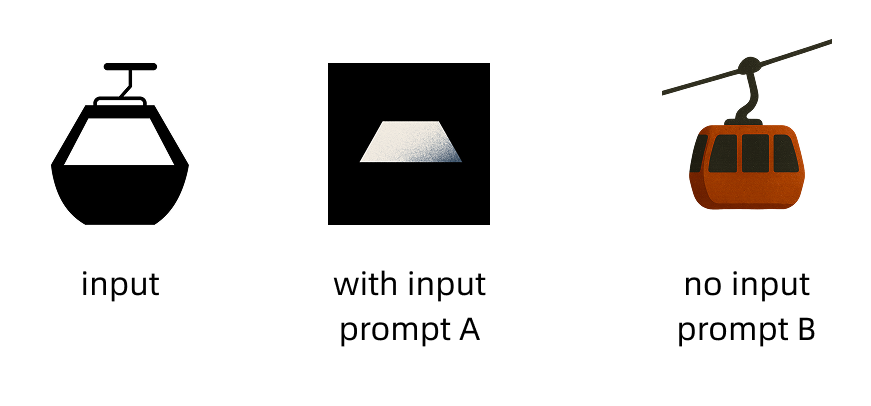
Truth #2: If AI could really draw, then prompt A wouldn’t have turned out so badly compared to prompt B.
promptA: style transformation, more texture, modern flat high-end illustration style.
promptB: more texture, modern flat high-end illustration style. Draw a climber with trekking poles, transparent background.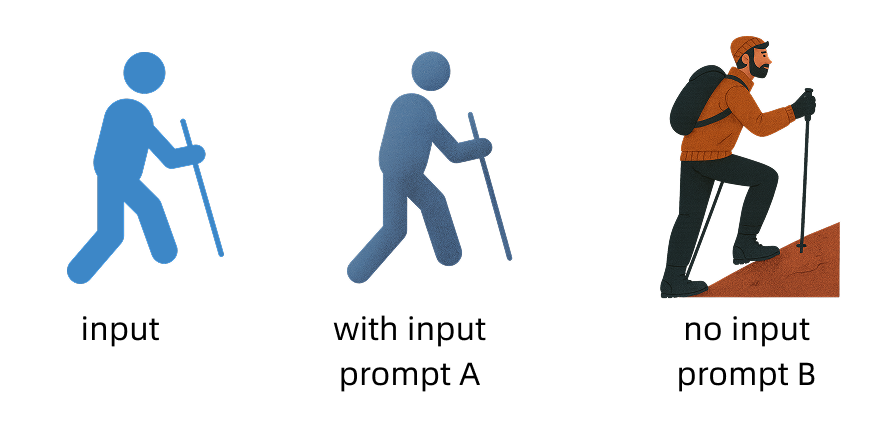
Truth #3: It’s less like drawing and more like tearing a puzzle piece from someone else’s work.
Final result:
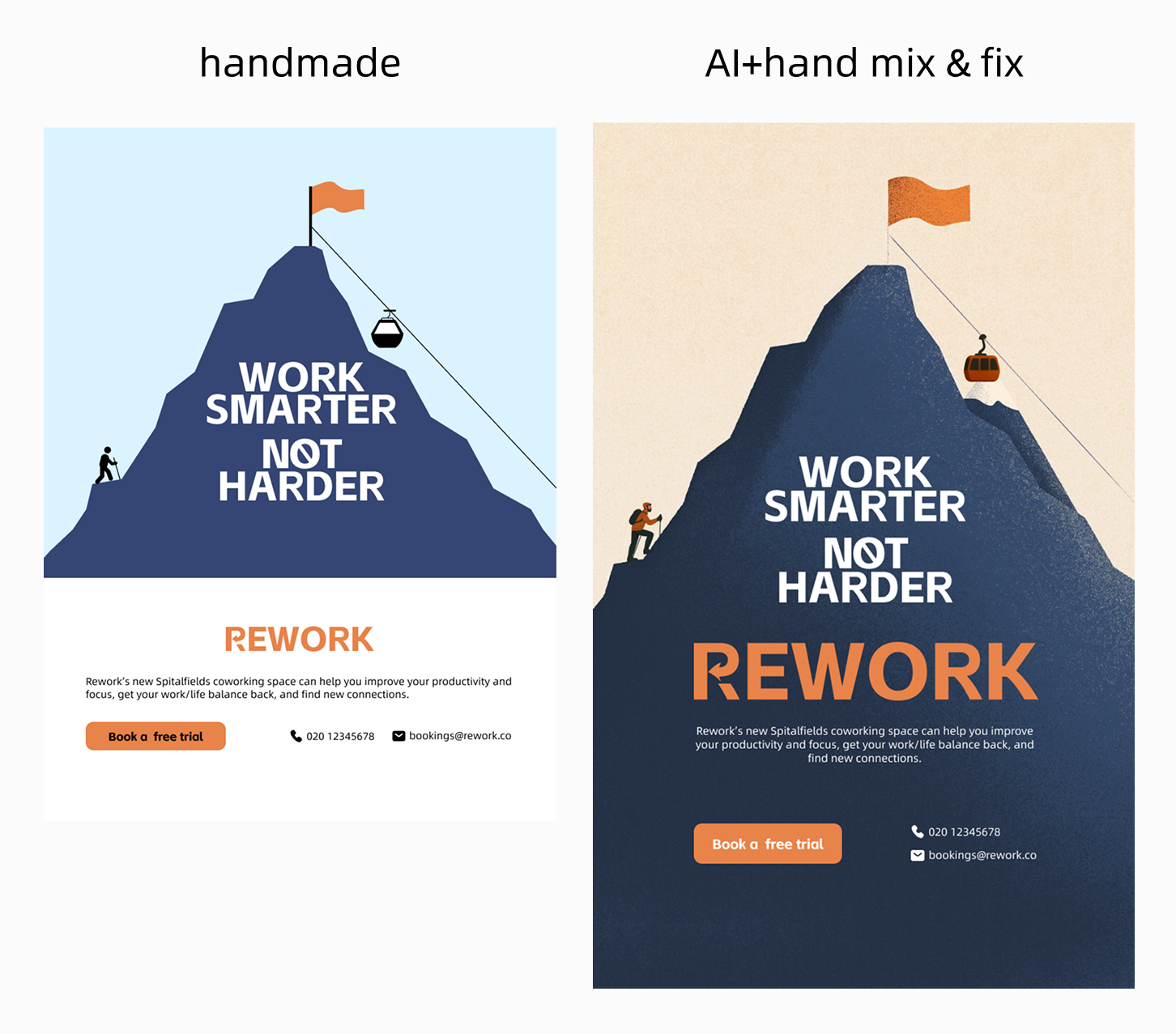
To be fair, the result looks pretty good. But here’s the thing: if I’d used someone else’s artwork, I’d either need to find it in a free asset library or pay for a license.
If you know AI is stealing, can you really use it in commercial work with a clear conscience?
3. Copyright, Intent, and the Efficiency Trap
From “Free as in Love” to “Free as in Theft (with AI’s Help)”
Sketching took me about an hour. Turning it into a polished vector usually takes 3–8 hours, depending on how detailed or how many versions I want. The AI version? Took 10–20 minutes on top of the sketch and gave me “assets.”
Honestly, as a self-taught designer, I used to struggle with the line between originality, inspiration, and plagiarism—and I’ve made mistakes.
Now with AI, it feels like the ethical bar just got lower.
Can AI Replace Designers?
Honestly? I think it can. O(∩_∩)O
I’m not a top-tier designer, but I’m great at quickly learning how to make things that look “good enough” to non-designers. That makes me sensitive to client needs and more focused on big-picture strategy than pixel-perfect polish.
Making a living from design is a lot like making a living from writing: it often feels like “getting something for nothing.”
Everyone can write an essay—but what kind of writing would you pay for? Same goes for design. The difference is, everyone’s been trained to appreciate writing, but visual taste? That’s left to chance.
The Efficiency Trap
When your workflow is hyper-efficient and creativity gets quantified, your thinking starts to narrow. Like me—when making a practice flyer, I didn’t prioritize trying a new visual style. I just went with the safest option.
Add a craving for speed, and those precious moments of “what if,” “aha,” or “let’s try this” start to disappear. They may not make the client happier, but they do make the world—and the designer—a little better.
If everyone can quickly make something that looks “good,” where does that leave designers?
Visual styles aren’t scarce anymore. In the AI era, you can test styles instantly. Detail and polish aren’t rare either—AI’s pretty good at stealing those too.
This next bit is from《斯伟江谈劳东燕,本来是多美好的相遇啊 》 by 张3丰
Some friends said the moment they saw those two names on the poster, they knew the event wouldn’t happen. I admired their maturity. Honestly, I had no such premonition. As signups kept growing, I was just wondering if the bookstore had enough chairs.
I’m not that mature anymore. In fact, I’ve become childish—and I’m happy about it.
I spent over a decade as a newspaper editor. My job was to delete and revise reporters’ words and ideas. I knew what couldn’t be said, what was dangerous.
I knew a lot of “no’s.”
But now, I’ve forgotten many of them. I’ve become simple again. I believe in “yes,” “should,” and “can.” I want to make beautiful things happen.
Since quitting in 2019, that’s been my state of mind. When I write something, I don’t worry if it’ll be deleted. If it is, I still sleep well—
Because what I wrote was what I truly wanted to say.
And what I design is what I truly want to design.
That’s my path as a designer.
4. Final Thoughts
I’ll keep designing. Whether I’ll keep doing it as a job? That’s another question. The design industry is brutal these days. Sometimes, design feels like surrogacy.
A good client is like a good ex-husband—maybe it still makes sense for a straight woman to have a child for someone she once loved.
This post was written on November 5, 2025. Just a little snapshot of the times.